Proudly serving Tucson, Oro Valley, Marana, Sahuarita, Green Valley, Vail & surrounding areasCall or Text 24/7: 520-569-2109

Roof Repair and System Replacement for Oro Valley, AZ Homes and Businesses

Tucson Quality Roofing provides roof repair, roof replacement, and roof coating for homes and businesses throughout Oro Valley, Arizona. Our crews also work on tile, flat, foam, shingle, and metal roofing systems. Emergency roof leak repair and commercial roofing round out a service line built for Sonoran Desert properties. As a licensed, insured, and family-owned roofing company, we treat every Oro Valley job as local work.

Properties near Pusch Ridge and the Santa Catalina Mountains face intense UV exposure, sudden monsoon downpours, and wide temperature swings. Those conditions can dry underlayment, loosen flashing, curl shingles, and drive water through vulnerable penetrations. Our crews understand how Oro Valley's desert exposure affects Southwest tile roofs, flat commercial systems, and newer shingle homes. A free, no-obligation inspection can identify aging or storm damage before a small leak becomes a structural problem.

Oro Valley grew from 29,700 residents in 2000 to 47,070 in the 2020 census, and its median household income is nearly 50% above the national figure. That growing community includes homeowners and business owners who want roofing work planned for long-term performance rather than deferred maintenance.

★ ★ ★ ★ ★4.9/5 Average Rating - 20+ Years of Experience - Oro Valley Roofing Contractor Specialists - Residential & Commercial
Residential & Commercial Roofing

Roofing Services Across Oro Valley, AZ

Every roof type common to Oro Valley requires a different approach to repair, replacement, coating, and maintenance. We work throughout Rancho Vistoso, Naranja Town Site, Stone Canyon, Copper Creek, Vistoso Trails, and the areas around Oro Valley Marketplace and Steam Pump Road. Our crews also provide roofing service in surrounding communities, including Marana, AZ , Catalina, SaddleBrooke, the Catalina Foothills, greater Tucson, and Pima County.

Roof Repair

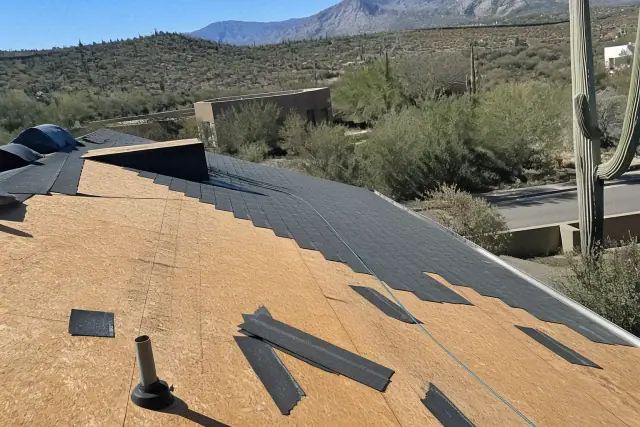
Asphalt shingles being installed on a sloped roof in Oro Valley, AZ.

We patch flashing, reseal penetrations, replace cracked tiles, and correct underlayment failures on Oro Valley homes. Repairs also address sun-baked shingles, monsoon-driven leaks, and failures around HVAC penetrations. Explore Service

Explore Service
Roof Replacement

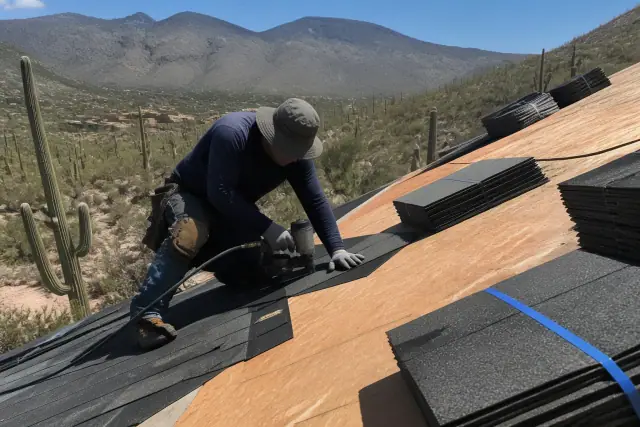
Technician installing shingles on a steep roof in Oro Valley, AZ, with desert landscape in the background.

When a roof has exceeded its service life or repair costs approach the value of a new system, we explain tear-off, decking inspection, underlayment upgrades, and material installation. Asphalt shingle replacements nationally run $5,000 to $10,000; full replacement projects average $9,526, with a typical range of $5,868 to $13,217 depending on size, pitch, and material. Explore Service

Explore Service
Roof Coating

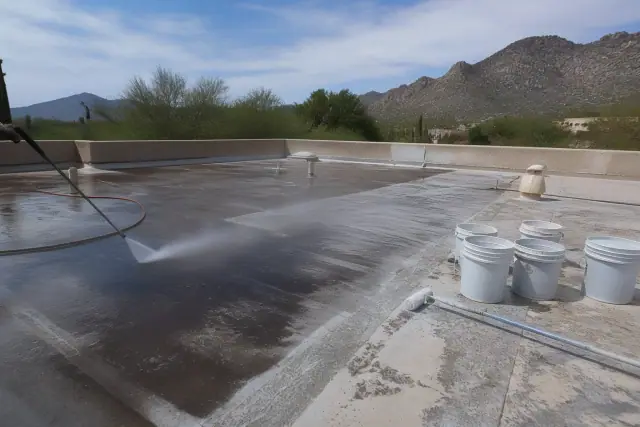
Pressure washer cleaning a weathered roof before coating in Oro Valley, AZ, with buckets and rollers nearby.

Elastomeric and silicone coatings can extend the life of flat and low-slope roofs by reflecting UV radiation. With roof surface temperatures able to exceed 150 degrees Fahrenheit in July, a reflective coating can reduce thermal cycling and slow membrane cracking. Explore Service

Explore Service
Tile Roof Repair

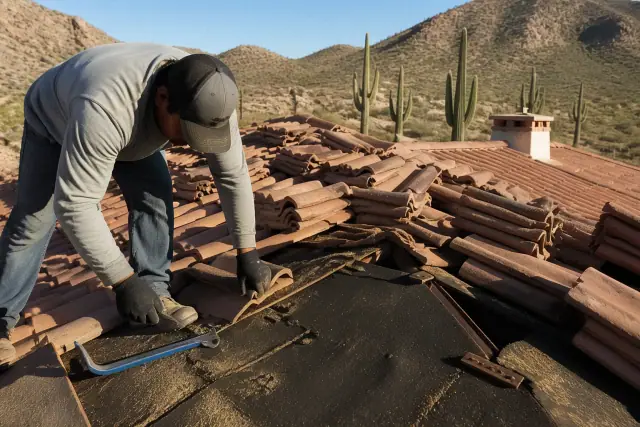
Roofer inspecting clay tiles and waterproof underlayment on a sun-drenched roof in Oro Valley, AZ.

Concrete and clay tiles suit Oro Valley's Southwest-style homes, but the underlayment beneath them can fail after 20 to 25 years of UV exposure. We carefully remove and reset tiles to match existing profiles, replace felt or synthetic underlayment, and reseal ridge and hip caps.

Flat Roof Repair

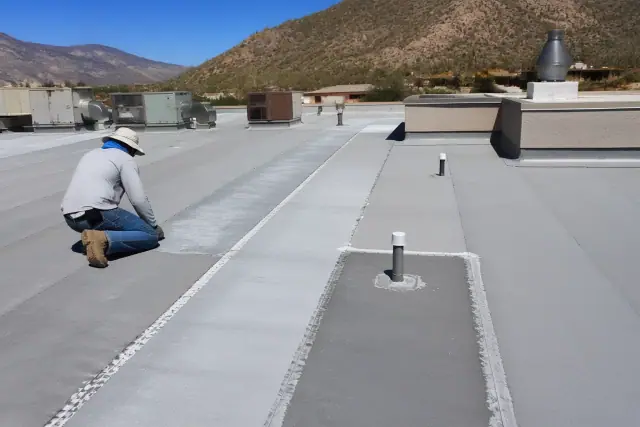
Contractor repairing a flat roof membrane with sealant near Sonoran Desert foothills in Oro Valley, AZ.

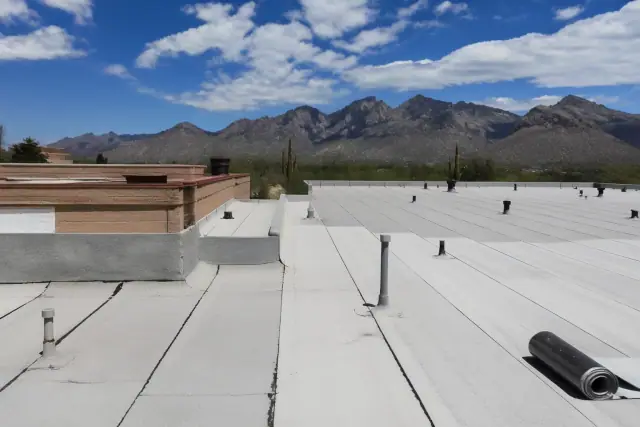
Flat and low-slope roofs on additions, casitas, and commercial buildings depend on clear drainage. We address membrane damage and ponding water before prolonged standing water contributes to thousands in structural repair costs over time.

Foam Roofing

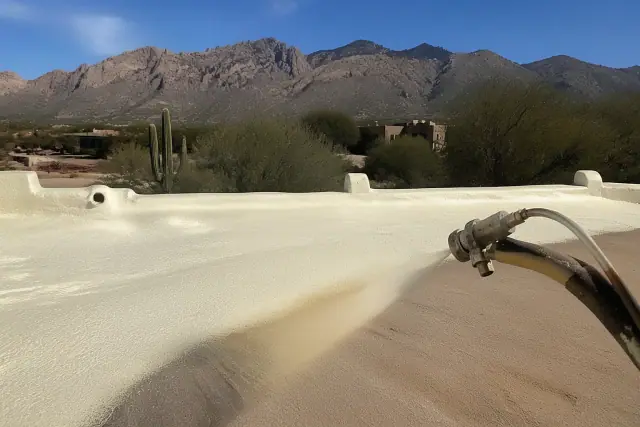
Contractor applying polyurethane foam roofing to a building in Oro Valley, AZ, with desert mountains in the background.

Spray polyurethane foam forms a seamless, fully adhered surface with no seams for water to exploit. Its insulation value can reduce summer cooling costs, and the system can be recoated every 10 to 15 years rather than replaced.

Shingle Roofing

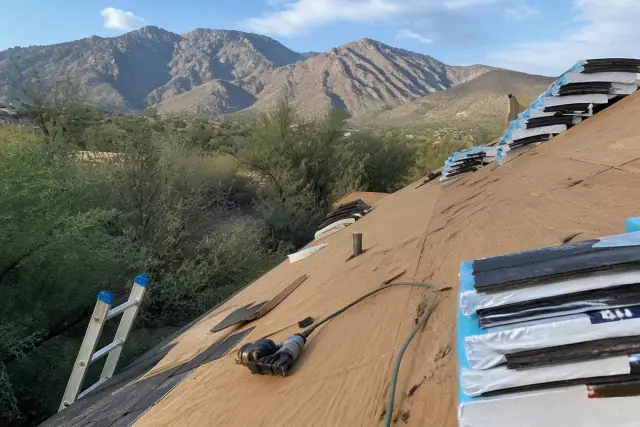
Shingle bundles secured to a steep-sloped roof during a construction project in Oro Valley, AZ.

Architectural shingles need high wind and UV ratings for desert exposure. We install shingles suited to high-wind zones and repair the granule loss, curling, and nail pops that commonly appear after 12 to 15 years of intense sun.

Metal Roofing

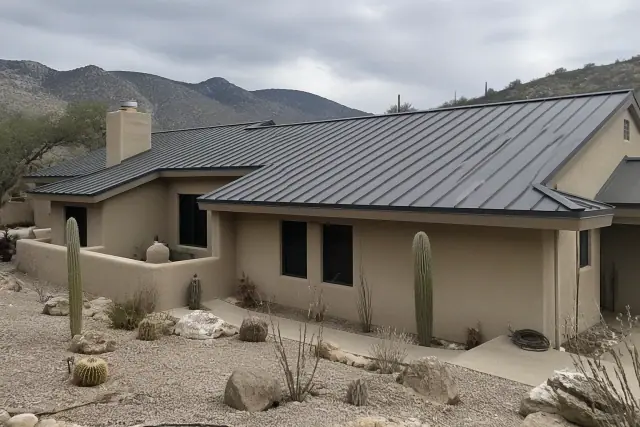
Standing seam metal roof on a stucco home with Catalina Mountain foothills in the background in Oro Valley, AZ.

Standing seam metal roofing offers reflectivity plus resistance to monsoon wind and hail. With proper maintenance, a metal system can last 40 to 50 years, while studies show cumulative energy savings of $8,500 to $18,000 over that lifespan through reduced cooling loads.

Emergency Roof Leak Repair

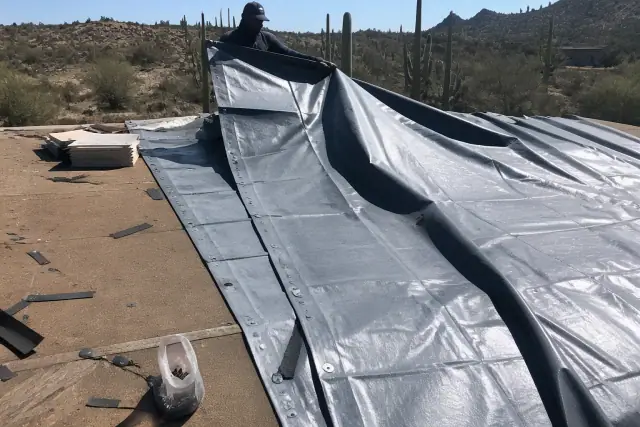
Heavy-duty tarp secured over a damaged roof section under the bright sun in Oro Valley, AZ.

Wind-driven rain and hail can open a roof quickly during monsoon season. We offer 24/7 emergency roofing response when a leak threatens the interior, with same-day service available in most cases when customers call promptly after storm damage.

Commercial Roofing

Professional applying heat-welded seams to a commercial roof in Oro Valley, AZ, with Catalina Mountains in the background.

Retail centers, medical offices, and tech and biotech facilities along Innovation Park Drive depend on low-slope systems that limit unplanned downtime. We maintain modified bitumen, single-ply membrane, and foam roofs while working around business hours to reduce disruption.

Roofing Decisions

How to Choose Roofing for Oro Valley Properties

The right roofing plan starts with the existing system, its age, the extent of damage, drainage, and the property's exposure to heat and wind. A careful comparison should also account for repair value, expected maintenance, material performance, and any code-required upgrades rather than focusing on the lowest initial price alone.

Roof Condition and Repair Scope

A surface inspection should distinguish isolated flashing, penetration, tile, or membrane damage from broader underlayment or decking failure. That condition assessment determines whether a targeted repair can solve the problem or a larger scope is warranted.

Repair Versus Replacement Value

Repair makes sense when damage is contained and the surrounding roof still has useful life. Replacement deserves consideration when the system has exceeded its service life or repeated repairs approach the value of a complete tear-off and installation.

Material Fit for Desert Exposure

Oro Valley roofing materials must handle constant UV radiation, thermal movement, dust, and sudden rain. Tile underlayment, reflective metal, coated membranes, foam, and high-rated shingles each solve different combinations of those conditions.

Drainage on Low-Slope Roofs

Flat roofs on casitas, additions, and commercial buildings need positive drainage and clear scuppers. Ponding water is a leading local cause of membrane failure, while dust storms ahead of monsoon cells can clog drains overnight.

Wind and UV Ratings

Shingle and metal selections should match the property's exposure to monsoon gusts, hail, and year-round sun. Product ratings and manufacturer installation details matter because material alone cannot compensate for improper fastening, lapping, or sealing.

Maintenance and Recoating Cycle

A roof's long-term value includes inspections, drain cleaning, resealing, and recoating where appropriate. Planning that maintenance around the actual system can slow avoidable damage and preserve a repair or installation investment.

Oro Valley Roof Issues

Common Roofing Problems for Oro Valley Properties

Desert sun, fast-moving monsoon cells, dust, and roof-specific aging create recognizable failure patterns across Oro Valley. Finding the actual entry point and material weakness is essential because the visible ceiling stain may be far from the damaged flashing, underlayment, drain, or penetration above it.

Request Roof Inspection

UV and Thermal Cycling

Oro Valley receives over 300 days of sun a year, and roof surfaces regularly run 40 to 50 degrees above the ambient air temperature. That exposure breaks down asphalt oils, dries tile underlayment, and fatigues membranes as materials repeatedly expand and contract.

Monsoon Wind and Hail

From June through September, intense monsoon storms can bring gusts over 50 mph, heavy bursts of rain, and occasional hail. Loose flashing, cracked tiles, and exposed seams can become active leaks quickly under wind-driven water.

Aged Tile Underlayment

Concrete or clay tiles may still look serviceable while the felt or synthetic layer beneath them has deteriorated. Careful tile removal, underlayment replacement, profile matching, and resealing at ridges and hips address the water-shedding system beneath the visible surface.

Ponding Water and Clogged Drains

Low spots, blocked scuppers, and dust-filled drains allow standing water to remain on flat roofs. The extra load and prolonged moisture can crack membranes and eventually contribute to costly structural repairs.

Sun-Baked Shingle Damage

Intense desert sun can accelerate granule loss, edge curling, and nail pop failures on asphalt shingles. These symptoms can expose the roof to water intrusion and signal that the surrounding shingle field needs a closer condition assessment.

Flashing and HVAC Penetration Leaks

Open seams, failed sealant, and worn flashing around vents and HVAC penetrations create common leak paths on desert homes. Correct repair restores the drainage detail so water sheds away from the opening instead of collecting around it.

Why Choose Us

Why Choose Tucson Quality Roofing in Oro Valley?

Our family-owned roofing company treats Oro Valley as local work and plans around the ways desert heat, dust, and monsoon storms affect each roof type. We pair that local focus with verifiable contractor credentials, written scopes, manufacturer installation requirements, and a final review of completed work.

Local Desert Roofing Experience

Our crews understand that a west-facing tile roof near Stone Canyon can age differently from a north-facing flat roof near Naranja. Experience across Southwest tile homes, shingle subdivisions, and Innovation Park commercial buildings helps us evaluate how each system fails under local conditions.

Licensed, Bonded, and Insured

Tucson Quality Roofing operates as a licensed, bonded, and insured contractor under the Arizona Registrar of Contractors with the classification specific to roofing work. We provide a valid ROC license number, current insurance certificates, and local references on request.

Clear Scope and Quality Checks

Before work begins, the written estimate separates materials, labor, and code-required upgrades. Our crews follow manufacturer specifications, inspect completed details such as underlayment laps, penetrations, and flashing, then walk the finished roof with the customer before final payment.

Clear Roofing Process

Our Roof Repair Process in Oro Valley

From the first inspection through the final walkthrough, each step is designed to show what is damaged, what the proposed work includes, and how the finished roof matches the written scope. The process also makes room for code requirements and storm documentation when they apply.

01.

Schedule a Free Inspection

The project begins with a free, no-obligation appointment to discuss leaks, visible wear, roof age, or recent storm damage. That conversation helps focus the on-site inspection on the customer's immediate concerns.

02.

Inspect the Roof and Attic

We walk the roof surface, check attic ventilation and insulation, and examine flashing, penetrations, drainage, and material condition. Existing damage is documented with photos so the findings are visible rather than assumed.

03.

Review Findings and Options

We explain what is actually wrong and whether repair, coating, maintenance, or replacement fits the roof's condition. Customers receive a clear picture of the tradeoffs before choosing a scope.

04.

Receive a Written Estimate

The estimate breaks out materials, labor, and any code-required upgrades separately. For hail or wind damage, we also document the roof conditions thoroughly enough to support an insurance claim.

05.

Complete the Roofing Work

Our crews complete repairs or installation according to the approved scope and manufacturer specifications. That includes details such as correctly lapped underlayment, sealed penetrations, properly placed flashing, GAF-rated shingle systems, and spray foam applied to the proper mil thickness where relevant.

06.

Walk the Finished Roof

After our own completion inspection, we walk the finished roof with the customer and confirm that the work matches the estimate. The scope is reviewed before final payment rather than after a callback.

Roofing Applications

Roofing Solutions for Oro Valley Homes & Businesses

Case Study 1: Southwest Tile Roofs: Matching tile profiles, replacing aged underlayment, and resealing ridge and hip caps restores the water-shedding layers beneath the visible tile.

Case Study 2: Flat and Low-Slope Roofs: Drainage correction, membrane repair, foam maintenance, and reflective coatings address standing water, seamless protection, and desert heat on casitas, additions, and commercial roofs.

Case Study 3: Commercial and Tech-Corridor Buildings: Modified bitumen, single-ply membrane, and foam roof work can be scheduled around business hours for retail, medical, tech, and biotech properties along Innovation Park Drive.

Protect Your Property

Schedule a Free
Roof
Inspection

If your Oro Valley roof shows wear, aging, ponding water, or storm damage, request a free, no-obligation inspection. We will document the condition, explain practical repair or replacement options, and provide a written estimate with materials, labor, and applicable code upgrades separated.

Local Roofing Help

Roofing FAQs for Oro Valley, AZ

These answers cover inspections, roofing systems, desert wear, monsoon preparation, replacement costs, local requirements, and service coverage. For advice tied to your roof's material and condition, schedule an on-site inspection.

Call Our Roofers

We provide roof repair, replacement, coating, tile and flat roof repair, foam, shingle, and metal roofing, emergency leak repair, and commercial roofing. The recommended service depends on the roof type, extent of damage, drainage, and remaining service life.

Yes. Every project begins with a free, no-obligation inspection of the roof surface, attic ventilation and insulation, drainage, penetrations, and visible damage, with photos used to document the findings.

Yes. We offer 24/7 emergency roofing response when a leak threatens the interior, and same-day service is available in most cases when customers call promptly after storm damage.

Nationally, asphalt shingle replacements run $5,000 to $10,000, while full roof replacement projects average $9,526 and typically range from $5,868 to $13,217. The actual amount depends on roof size, pitch, material, decking condition, underlayment, and code-required work.

The tiles themselves may remain intact while the underlayment beneath them deteriorates after 20 to 25 years of UV exposure. An inspection can check for brittle underlayment, failed ridge or hip seals, cracked tiles, and water entry without assuming every tile must be replaced.

A properly maintained standing seam metal system can last 40 to 50 years. Its reflectivity can reduce cooling loads, and studies show cumulative energy savings of $8,500 to $18,000 over that lifespan.

A spray polyurethane foam roof can be recoated every 10 to 15 years rather than replaced when the system remains a sound candidate. Its seamless, fully adhered surface also provides insulation value that can reduce summer cooling costs.

Elastomeric and silicone coatings reflect UV radiation that would otherwise heat and age a flat or low-slope membrane. Roof surface temperatures can exceed 150 degrees Fahrenheit in July, so reducing thermal cycling can help slow membrane cracking.

Granule loss, curling, and nail pops are common after 12 to 15 years of intense sun. Architectural shingles selected for high-wind and UV exposure still need correct fastening, flashing, ventilation, and periodic condition checks.

We service modified bitumen, single-ply membrane, and foam systems on retail centers, medical offices, and tech and biotech facilities. Work can be planned around business hours to limit disruption and unplanned downtime.

We recommend an inspection each spring before the June-through-September monsoon season. Storms can bring gusts over 50 mph, heavy rain in short bursts, and occasional hail, so loose flashing and cracked tiles are better found before wind-driven water tests them.

Oro Valley receives over 300 days of sun a year, and roof surfaces regularly exceed ambient air temperature by 40 to 50 degrees. Constant UV exposure dries asphalt oils and tile underlayment while accelerating fatigue in membrane systems.

Roofing work in Oro Valley falls under Pima County Development Services permitting requirements and adopted International Residential Code and International Building Code editions. Reroofing scopes that cross applicable thresholds may require underlayment, ice-barrier-equivalent, or wind-rating updates, so any required upgrades should be identified in the written estimate.

The assessment documents the roof surface, attic ventilation and insulation, material condition, penetrations, drainage, and visible damage with photos. The written estimate then separates materials, labor, and code-required upgrades, with added condition documentation when hail or wind damage may support an insurance claim.

We work throughout Rancho Vistoso, Naranja Town Site, Stone Canyon, Copper Creek, Vistoso Trails, the Oro Valley Marketplace area, Steam Pump Road, and the Innovation Park corridor. Service also extends to Catalina, Marana, SaddleBrooke, the Catalina Foothills, greater Tucson, and Pima County as needed.