Best Choice for Pitched Roofs
Concrete or clay tile is the all-around choice for most pitched Tucson residences, provided the framing can carry the weight.
Tucson Quality Roofing recommends matching the material to the roof's slope and structure: clay or concrete tile for most pitched Tucson homes, spray polyurethane foam for flat or low-slope roofs, and standing seam metal where long service life, reflectivity, and severe-weather resistance are priorities. Arizona's intense UV, 100-plus-degree summers, and monsoon downpours make installation quality and ongoing maintenance as important as the material itself.
Concrete or clay tile is the all-around choice for most pitched Tucson residences, provided the framing can carry the weight.
Use coated spray foam or a single-ply membrane on flat and low-slope roofs; reserve tile and shingles for pitches designed to shed water through overlapping units.
Before choosing, confirm roof-deck condition, load capacity, drainage slope, flashing details, and any HOA restrictions.
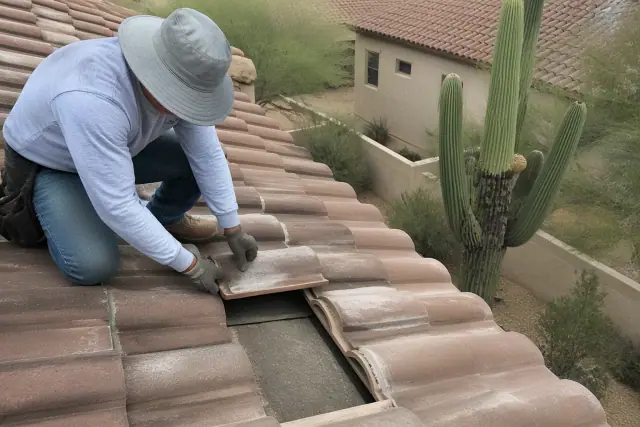
A pitched roof with light-colored clay or concrete tile illustrates the strongest all-around residential fit for heat resistance and long service life.
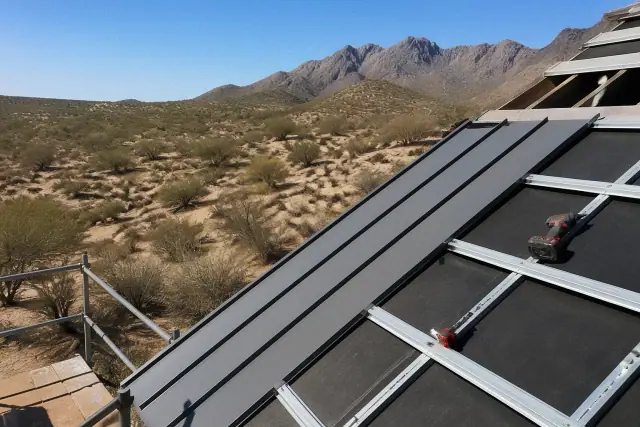
Raised seams and concealed fasteners show how standing seam panels reflect heat and shed water during summer monsoon downpours.
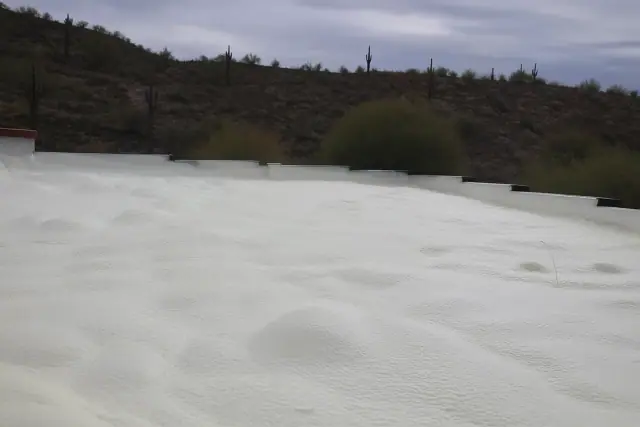
A continuous spray foam surface with an elastomeric coating demonstrates the seamless water barrier and UV protection suited to flat roofs.
Tile suits pitched residential roofs and may last up to 100 years, while its felt or synthetic underlayment generally needs replacement every 20 to 30 years. Clay's weight should be checked against the structure before installation.
Spray polyurethane foam costs roughly $4 to $7 per square foot and creates a fully adhered, insulated membrane without seams. Its protective coating needs a recoat every 10 to 15 years, and performance depends on application thickness and drainage slope.
Standing seam metal costs $7 to $16 per square foot installed, typically lasts 40 to 70 years, and can cut cooling costs by around 40% compared with darker, heat-absorbing materials. Correct flashing around penetrations is essential to prevent leaks.
Asphalt shingles cost $3 to $5 per square foot installed and generally last 15 to 25 years in Arizona: standard shingles typically reach 15 to 20 years, while heat-rated architectural shingles may reach 20 to 25 years. Dark colors absorb more heat, and intense UV accelerates curling and granule loss.
| Roof Material | Best Fit | Typical Installed Cost | Service Life or Care |
|---|---|---|---|
| Clay or concrete tile | Pitched residential roofs with verified structural capacity | $10 to $20 per square foot | Up to 100 years; underlayment every 20 to 30 years |
| Standing seam metal | Long-term heat, wind, and water-shedding performance | $7 to $16 per square foot | 40 to 70 years, depending on gauge and coating |
| Spray polyurethane foam | Flat and low-slope homes or commercial roofs | Roughly $4 to $7 per square foot | Protective recoat every 10 to 15 years |
| Asphalt shingles | Traditionally pitched roofs with a lower upfront budget | $3 to $5 per square foot | 15 to 25 years, depending on shingle type |
No single material wins on every roof. Pitched residences usually favor tile, flat ranch homes and commercial buildings favor coated spray foam, and metal earns its higher initial cost where longevity, reflectivity, and wind resistance matter most. Across Tucson and Pima County, tile, metal, and coated foam can outlast standard shingles by 20 years or more in desert exposure, but only when the roof assembly, ventilation, flashing, and maintenance match the material.
Roof pitch, structural load capacity, architectural style, west-facing sun exposure, drainage, HOA restrictions, and insurance priorities all matter. A historic tile roof near Sam Hughes calls for a different approach than a flat commercial roof along the Tucson International Airport corridor, and total replacement costs in the Tucson metro typically run $10,000 to $25,000. Larger or complex roofs using premium materials such as natural slate or full clay tile can exceed $30,000, so compare scope and material-specific maintenance, not price alone.
Arizona's typical roof style is low-pitched or flat, often finished with clay or concrete tile or coated foam. For the longest service life, clay tile leads, followed by metal; for the lowest upfront cost, asphalt shingles lead; and for flat-roof performance, coated spray foam is the usual fit. Some insurers favor metal or Class 4 impact-rated materials, but discount eligibility varies by carrier and should be confirmed before the roof choice is based on premiums.
Share the roof's slope, current material, age, visible wear, and any drainage or monsoon-damage concerns. A Tucson roofing inspection can confirm structural fit, explain maintenance needs, and provide a written estimate before you choose a replacement material.