Common Failure Points
Water usually enters through separated flashing, cracked tile, deteriorated pipe boots, lifted shingles, worn valleys, or failed seals rather than through an obvious open hole.
Tucson Quality Roofing diagnoses and repairs recurring roof problems every week across residential and commercial properties in Tucson, from the Catalina foothills to south-side flat roofs near Davis-Monthan. Intense UV exposure, monsoon downpours, wind, and sharp daily temperature swings can turn small defects into leaks. This guide explains the problems seen most often across Pima County, what causes them, and when an inspection makes sense.
Water usually enters through separated flashing, cracked tile, deteriorated pipe boots, lifted shingles, worn valleys, or failed seals rather than through an obvious open hole.
Daily temperature changes can top 40 degrees between sunrise and afternoon heat, while UV exposure, monsoon wind, hail, and heavy downpours accelerate material wear.
Document stains, loose edges, bald shingles, cracked tile, ponding, and when each symptom appeared, then trace the underlying flashing, membrane, ventilation, or drainage cause.
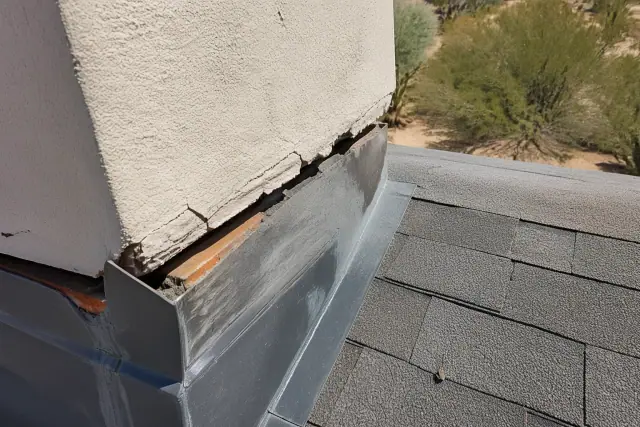
A close view should show insufficient overlap, corrosion, or metal pulling away from the joint. One failed flashing point can bypass the surrounding roof surface and send water along the decking.
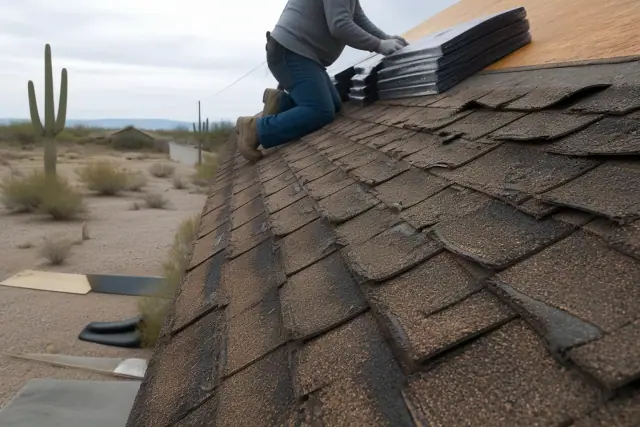
Lifted or curled edges, bald patches, and sand-like granules collected in a gutter are visible warning signs. Together, these clues can point to lost UV protection, aging asphalt, trapped attic heat, or wind stress.
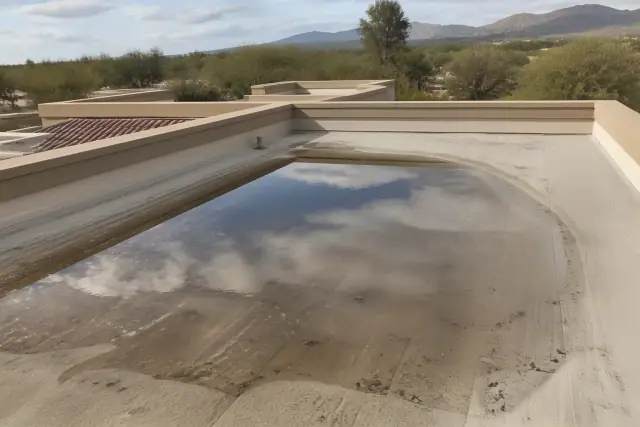
Show standing water around a low spot, seam, or drain on a foam or coated roof. The pattern helps reveal whether drainage and membrane condition need attention.
Water can travel along decking before appearing indoors, so a ceiling stain may be far from the cracked tile, failed flashing, or lifted shingle that admitted it.
Across Arizona, shingle estimates range from 20-50 years by grade, although Tucson conditions often put standard asphalt roofs near 20-25 years and premium heat-rated shingles closer to 30. Concrete tile commonly reaches 40-50 years, foam 25-35 years with recoating, metal 40-80 years, and shake-style roofing up to 30 years.
Water that remains on a flat or low-slope roof longer than 48 hours can accelerate membrane breakdown, strain seams, and add unwanted structural load.
Rubber vent boots can dry and crack under intense Arizona UV exposure within 10-15 years, leaving a small entry point that creates a concentrated ceiling stain below the vent.
| Roof Condition | What It Can Indicate | Practical Next Step |
|---|---|---|
| One leak near a chimney, wall, skylight, or vent | Separated flashing, a failed seal, or a cracked pipe boot | Trace the entry point and repair the flashing or membrane failure. |
| Lifted, curled, missing, or bald shingles | Wind uplift, trapped attic heat, age, or lost UV protection | Inspect the surrounding field and exposed underlayment. |
| Damage exceeds 25% of one roofing plane | A patch may leave uneven materials and vulnerable seams | Compare full-plane replacement with the insurer or code official's requirements. |
| Water remains on a flat roof longer than 48 hours | Drainage, slope, coating, or seam problems may be present | Check drains, low spots, seams, and the membrane before recoating. |
Leaks, shingle deterioration, flashing failure, ventilation defects, and drainage trouble account for most calls, but the visible symptom rarely tells the whole story. Missing shingles can expose underlayment and decking to sun and rain within a single season, while clogged gutters and worn valleys can force runoff beneath roof edges. Skylight seals, fish-mouth gaps, membrane shrinkage, ridging, and displaced aggregate create additional pathways for heat and water; lost aggregate can shorten a coating's life by several years. Moss and algae are less common in Tucson's arid climate, yet shaded north-facing valleys and areas around evaporative cooler drainage can retain enough moisture for growth. Small defects can compound into structural moisture damage over one or two monsoon seasons, so the underlying cause matters more than patching the first visible opening.
Tucson's triple-digit summer stretches age asphalt, rubber, foam, coatings, and sealants, while thermal cycling repeatedly expands and contracts joints and seams. Monsoon gusts can lift edges that have lost adhesion or shingles installed with too few fasteners, and hail can puncture the surface. Poor flashing overlap, the wrong metal gauge, weak original installation, and inconsistent maintenance increase the likelihood of failure. In the attic, inadequate intake and exhaust trap heat and moisture, accelerating shingle curl, deck warping, and tile-underlayment wear. Roofs left without inspection for a decade or more often fail before the upper end of their material range, while a documented maintenance schedule can help a roof approach its expected service life.
How do you know whether to repair or replace? An isolated flashing, boot, shingle, or membrane defect may be repairable, but when damage or required repair covers more than 25% of one roofing plane, insurers and code officials commonly require replacement of that full slope. What makes replacement expensive? Roofing material is usually the largest line item, skilled labor is often close behind, and tear-off, disposal, complex access, specialized equipment, or damaged decking can add cost. Which material suits Arizona? Concrete tile and foam handle long-term UV exposure well, metal reflects heat and resists uplift, and asphalt shingles offer a more affordable option; roof pitch, budget, drainage, and ownership plans should guide the choice. How often should the roof be checked? At least once a year and after significant monsoon, hail, or high-wind events, with more frequent attention for commercial and flat roofs where ponding and seam failures can develop faster.
Share the roof type, visible symptoms, and when the issue began. A local inspection can trace the entry point, document findings with photos, and clarify repair or replacement scope before work starts.