Can You Verify License and Insurance?
Ask for the ROC license number, surety bond information, general liability certificate, workers' compensation certificate, and a physical business address you can verify.
Tucson Quality Roofing prepared this guide for homeowners comparing roofing estimates in Tucson. The right questions reveal whether a roofer can document credentials, explain the scope, and match materials to local monsoon, UV, hail, and wind conditions before a contract is signed.
Ask for the ROC license number, surety bond information, general liability certificate, workers' compensation certificate, and a physical business address you can verify.
Confirm materials, tear-off, decking, flashing, drip edge, permits, timeline, crew size, daily cleanup, debris disposal, payments, change orders, and the final walkthrough in writing.
Request recent Tucson-metro references for work similar to yours, such as tile repair, flat-roof coating, or full shingle replacement, and ask whether employees or subcontractors performed the work.
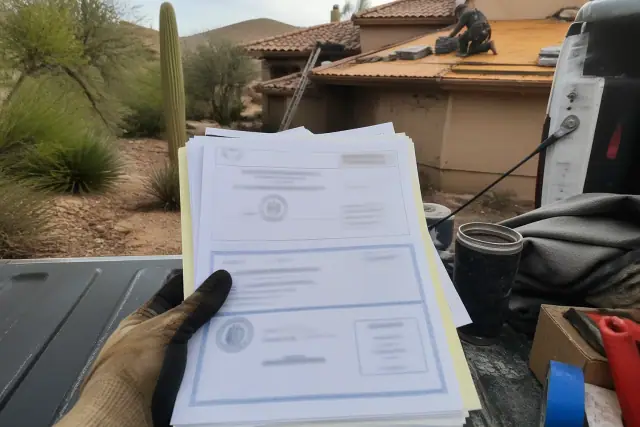
A clear view of the license number, insurance certificates, bond details, and physical business address shows which records a homeowner should verify before work begins.
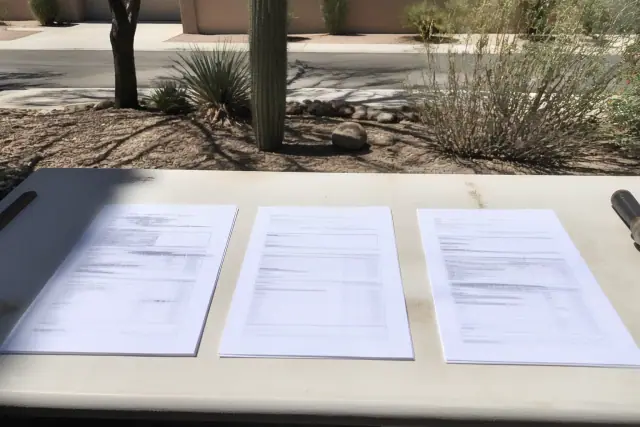
Compare material specifications, included work, permit responsibility, payment terms, warranty language, and cleanup plans rather than looking only at the totals.
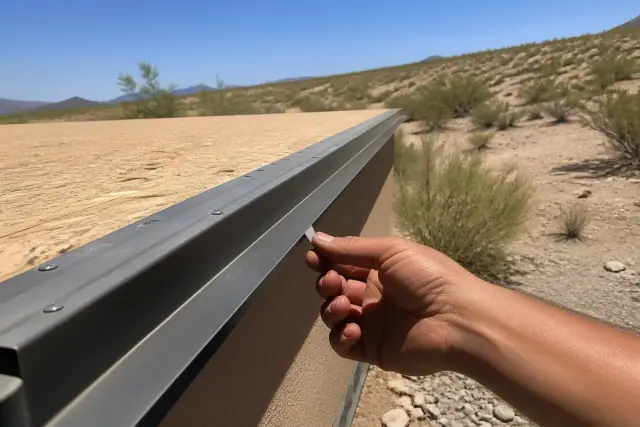
Documenting decking condition and edge details helps clarify whether the proposal includes hidden damage, full tear-off, and the parts most likely to affect the final scope.
For roofing work over $1,000 in combined labor and materials, Arizona requires a licensed contractor. Ask for the ROC license number, bond information, general liability certificate, and workers' compensation certificate. Two million dollars in general liability coverage is a common benchmark for crews handling larger commercial roofing projects.
Ask about shingle options, metal panel gauge and coating, foam systems for flat or low-slope roofs, and repair materials matched to existing clay or concrete tile.
A typical single-family shingle roof replacement in Tucson takes one to three days depending on square footage and complexity; tile and flat-roof coating projects can take longer. Ask for the crew size, daily plan, and expected completion date in writing.
Ask whether the old roof will be fully torn off. Layering new shingles over old ones voids most manufacturer warranties and can hide decking rot that should be addressed during the project.
| Question Area | Proof to Request | What to Clarify |
|---|---|---|
| Credentials | ROC license number, bond record, and current insurance certificates | Full company name and a physical Tucson or Pima County address |
| Recent experience | Two or three similar references from the last 12 to 18 months | Who performed the work and whether subcontractors were used |
| Roofing scope | Written material, tear-off, decking, flashing, and drip-edge details | How the 25% rule affects the repair-versus-replacement recommendation |
| Job plan | Timeline, crew size, permit responsibility, cleanup, and final walkthrough | Payment schedule and written change-order process |
A complete 16-question checklist covers the roofer's license, insurance, bond, manufacturer certifications, years in business, recent references, subcontractor use, material brands, warranty terms, timeline, permit handling, debris disposal, crew size, payment schedule, change orders, and final walkthrough. Written answers make it easier to compare scope and responsibility instead of relying on the lowest total alone.
Ask how each material handles intense UV exposure, monsoon downpours, sudden hail, dust storms, and wind load. A quality shingle roof runs 20-25 years under Tucson's sun exposure, while periodic recoating can extend a coated foam roofing system's service life another 10-15 years. For tile roofs, ask how replacement clay or concrete tile will be matched; for metal, ask about panel gauge and coating.
If you can ask only 6 questions, cover the company name and address, insurance, license, warranty, subcontractor use, and years in business. A top 8 comparison should cover license and insurance, workmanship guarantee length, manufacturer certification, timeline, crew size, material options, permit responsibility, and cleanup. For a 9-question roof-specific review, make sure flashing and drip edge, decking condition, and full tear-off are addressed along with the core credential and project questions.
Bring the roof type, visible damage, and written estimates to a local Tucson roofing conversation. Clarifying materials, scope, credentials, timeline, and cleanup before approval can prevent surprises once work begins.